

On the way, you’ll pass through Supai village, where the native tribe lives. There’s a gift shop, cafeteria, and a general store where you can get pretty much anything. I recommend packing light and picking up your supplies at the village — it supports the tribal community and lightens your load on a strenuous hike. The campground is 2 miles from the village, and Havasu Falls is just minutes away from there. There’s also a creek running through the campground that is spectacular in its own right — small cascading turquoise water running over a white limestone floor.
You can reserve your camping or lodging permits at the link below.
https://havasupaireservations.com/
Getting to the Havasupai campground is no easy feat. Located within the Grand Canyon region, the hike from the hilltop to the campground is 10 miles one way, typically taking 4–7 hours. Especially in the heat of summer, the temperature can easily reach 100–115°F in the shade. July and August are the hottest months, with high risks of heatstroke and flash floods. Hikers must start by 3–4 a.m. to arrive by 9–10 a.m. Needless to say, try to avoid the hot months if you can.
Waterfalls
There are five main waterfalls in Havasupai: Fifty Foot Falls, Navajo Falls, Havasu Falls, Mooney Falls, and Beaver Falls. I personally visited Havasu Falls, Mooney Falls, and Beaver Falls, so I’ll focus on those.
Havasu Falls
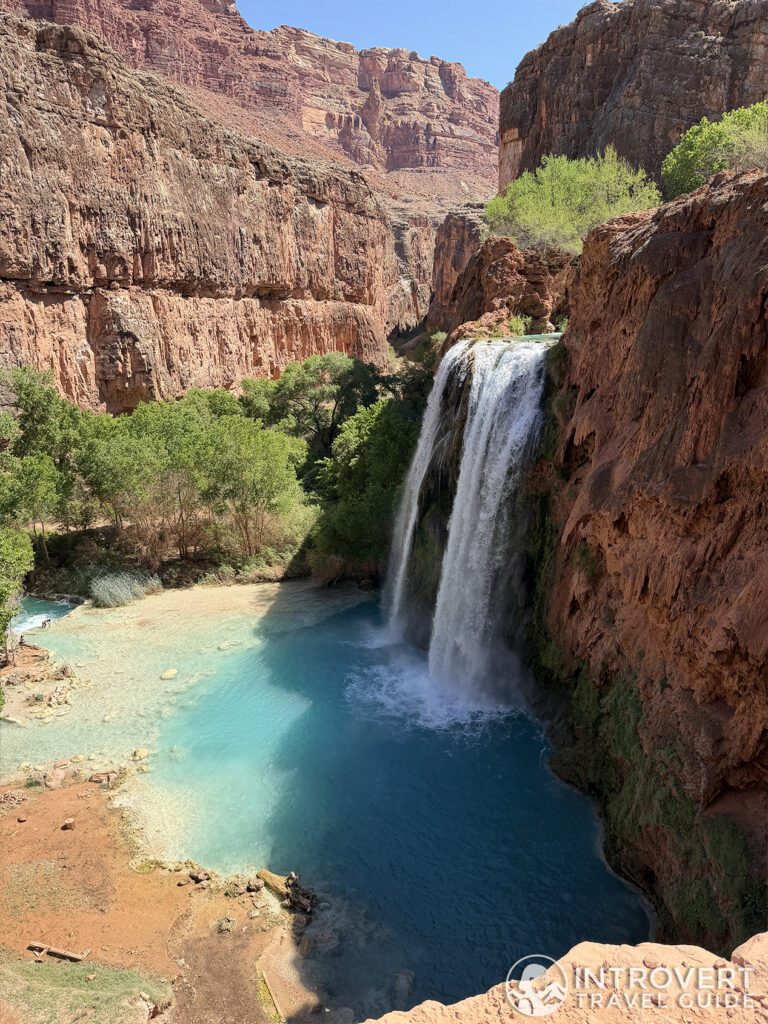
This is probably the easiest to access given how close it is to the campground — just a few minutes away. It’s a bit of an incline walking back up, but I need to reiterate how magical this place is. Havasu Falls and the surrounding campground are sacred to the Havasupai people, so please be respectful when you visit. You are a guest in an extraordinary place. While I was there, a group of people were playing frisbee. Yes, frisbee. Not only was it disturbing others trying to enjoy the view, it felt flagrantly disrespectful in a place of such significance.
Mooney Falls
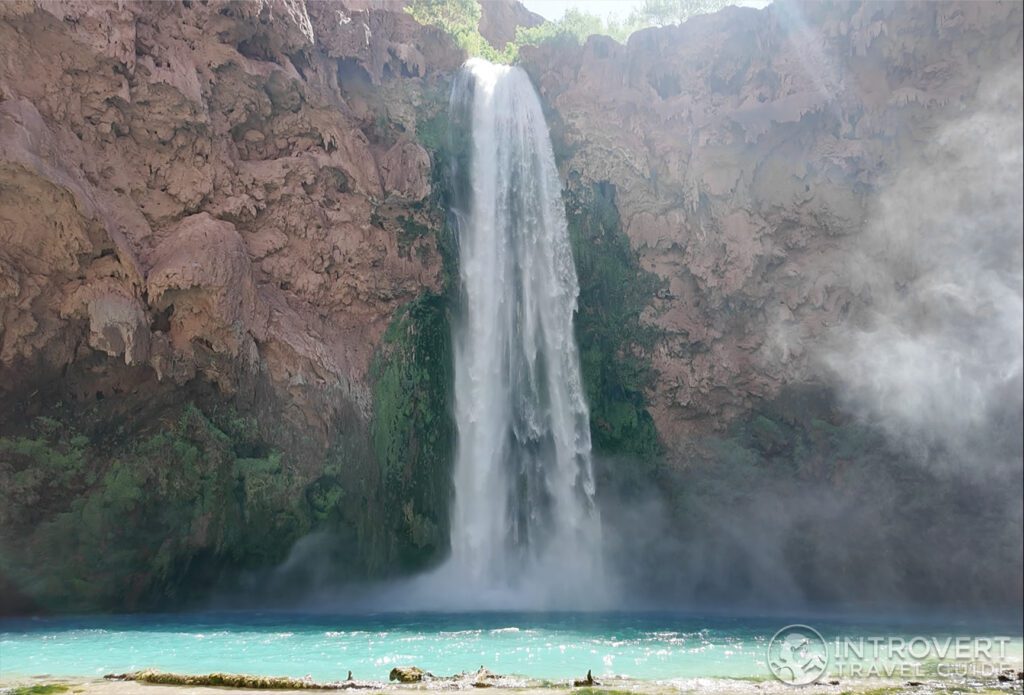
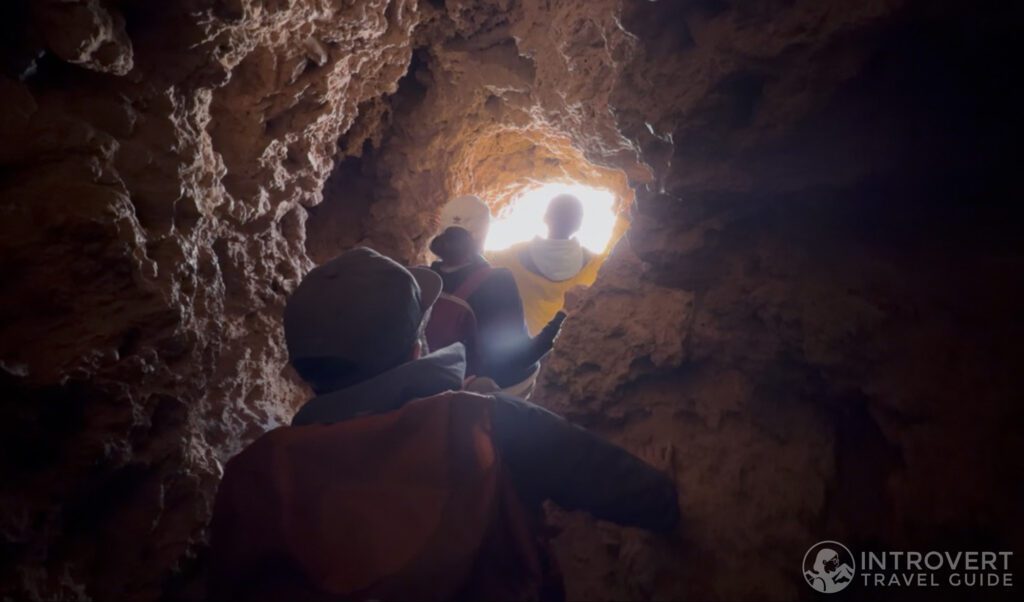
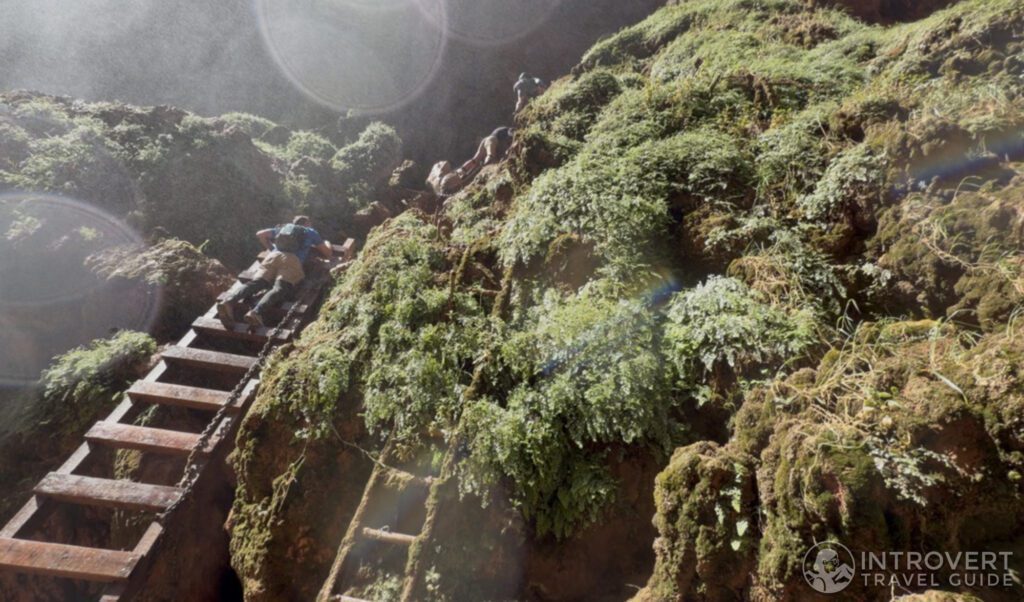
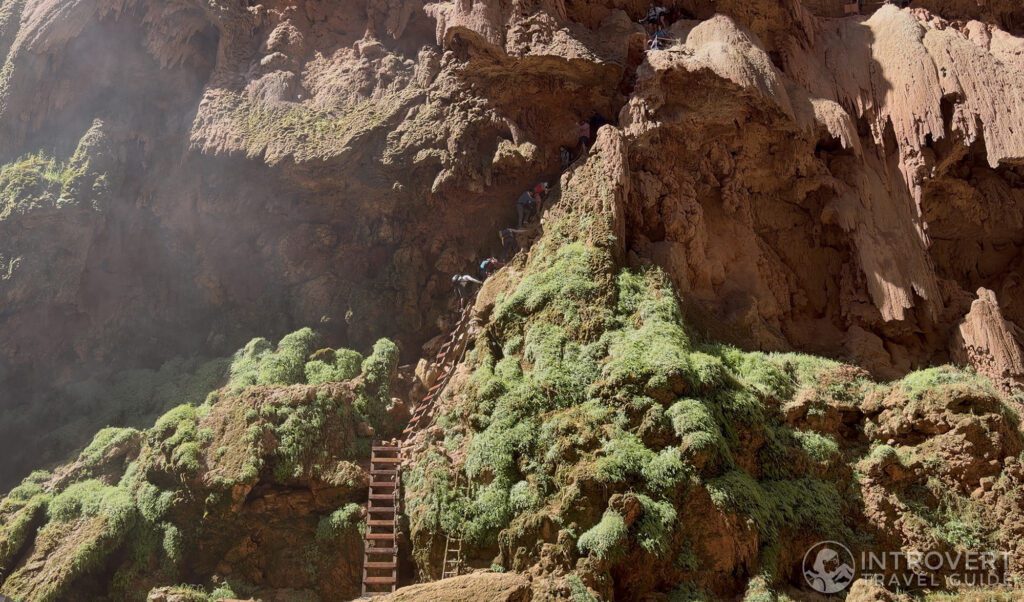
This waterfall seemed wider and more dramatic compared to Havasu Falls. If you’re an outdoor enthusiast with no fear of heights, you’ll have no problem — but it does require descending 200–250 ft down the cliff face. You’ll pass through a couple of very narrow caves, so steer clear if you’re claustrophobic. There are ladders — not the safest looking — with chains alongside to grab onto. We were stuck waiting for quite a while due to the queue, since only one person can go at a time. Shoes with good traction are essential — hiking sandals like Tevas or Chacos, or hiking shoes like I wore. Bring gloves too, as the wooden ladders are quite slippery from the constant mist of the falls. Once you make it to the base, the view is stunning. There’s a picnic table where we sat and enjoyed the view over lunch.
Beaver Falls
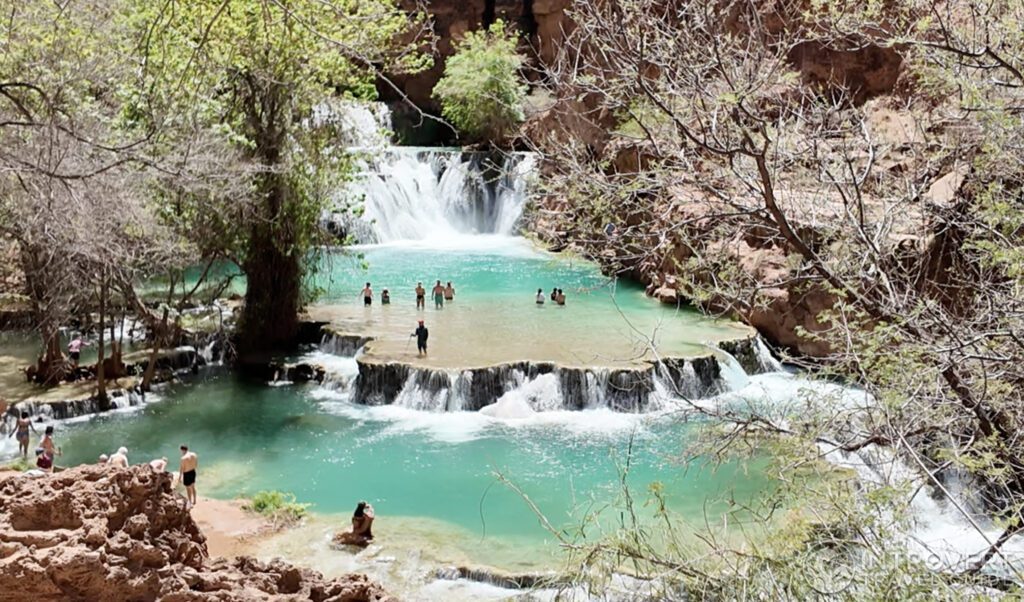
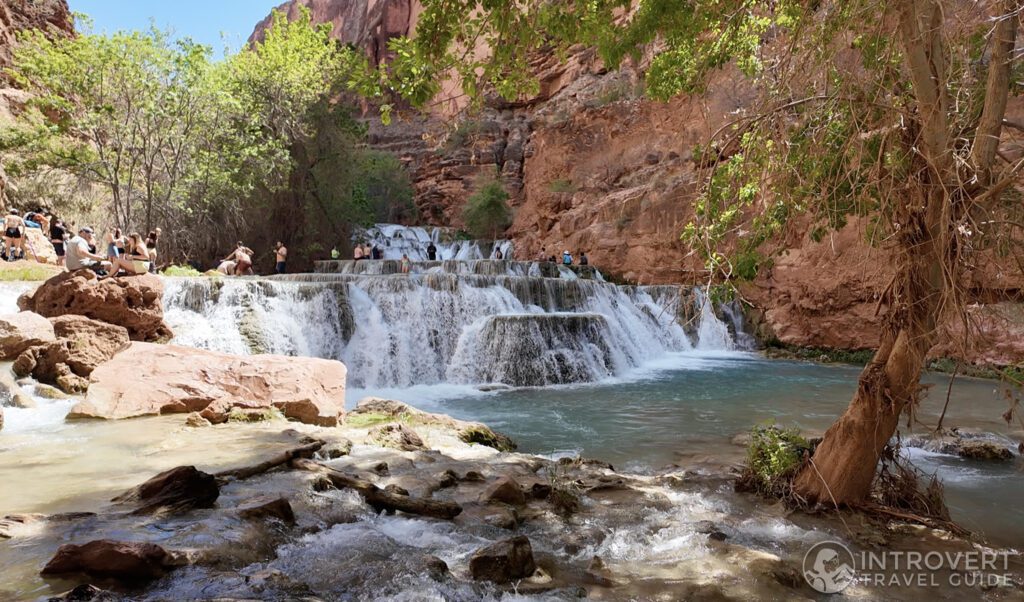
Don’t get me wrong — all the falls in Havasupai are amazing. But Beaver Falls was the most picturesque of all. The caveat is that getting there is a journey. You can only reach Beaver Falls by passing through Mooney Falls first, which means descending those ladders regardless. From Mooney Falls, the trek to Beaver Falls takes 1–2 hours depending on your fitness level. The creek runs the entire way between the two falls and it is spectacular. There are 3 or 4 water crossings, some waist deep, and the creek floor can be slippery so watch your step. Your hiking sandals will come in handy here. Wear a swimsuit if the weather allows, or quick-dry clothing — absolutely no cotton. The trail also involves some light rock climbing. I can already imagine seasoned climbers laughing at me calling it that, but it can feel quite challenging if you’re not used to it. Don’t be discouraged though — I saw kids around 12–14 years old and older folks completing this hike. They all looked like regularly active people, which gives you a good sense of the fitness level needed.
When you finally arrive at Beaver Falls, take it all in and cool off in the water. There aren’t many places to sit. Some people climb onto the rocks and jump, but I should mention that someone was seriously injured doing so. And unfortunately, the same frisbee group from Havasu Falls somehow found their way here too. I can’t say enough how much that affected the experience. Social media makes Havasupai look quiet and serene — it was far from that reality. Even on a weekday in the off season, all three falls were crowded, and the Supai village café had a long wait as well.
In spite of my far-from-perfect experience, none of it takes away from the sheer magnificence of Havasupai or the honor of meeting the kind tribal members there. If you decide to go, just know you can’t expect everything to look like what you see on social media.
History of the Havasupai Tribe
The Havasupai, known as the “People of the Blue-Green Waters,” have lived in and around the Grand Canyon for over 1,000 years. In 1882, President Chester A. Arthur issued an executive order declaring that land on the plateau of the canyon was to become public property — without the tribe’s knowledge. The order confined the Havasupai to a 518-acre plot of land in Cataract Canyon, stripping away almost all of their aboriginal land.
The arrival of settlers brought food shortages, smallpox, and other contagious diseases. By 1906, only 166 tribal members remained — half the population recorded in 1776. In 1901, President Theodore Roosevelt informed the tribe that the Grand Canyon National Park was being created and that they would have to leave. By 1928, the Havasupai had been forced out entirely by the National Park Service.
The tribe fought back vigorously. In 1975, after a long struggle, a bill was passed granting them a trust title to approximately 185,000 acres. An additional 95,300 acres were designated as “Havasupai Use Lands,” overseen by the National Park Service but available for traditional use by the tribe.
(Source) https://en.wikipedia.org/wiki/Havasupai
Pack It In, Pack It Out
You are responsible for taking out what you bring in. This includes all trash and gear. No-trash signs are posted everywhere, making the rule very clear — yet I was disappointed to see people still leaving trash behind. We are visitors on sacred ground, and we should have more respect for the people and their land.
The Havasupai Pack Animal Controversy
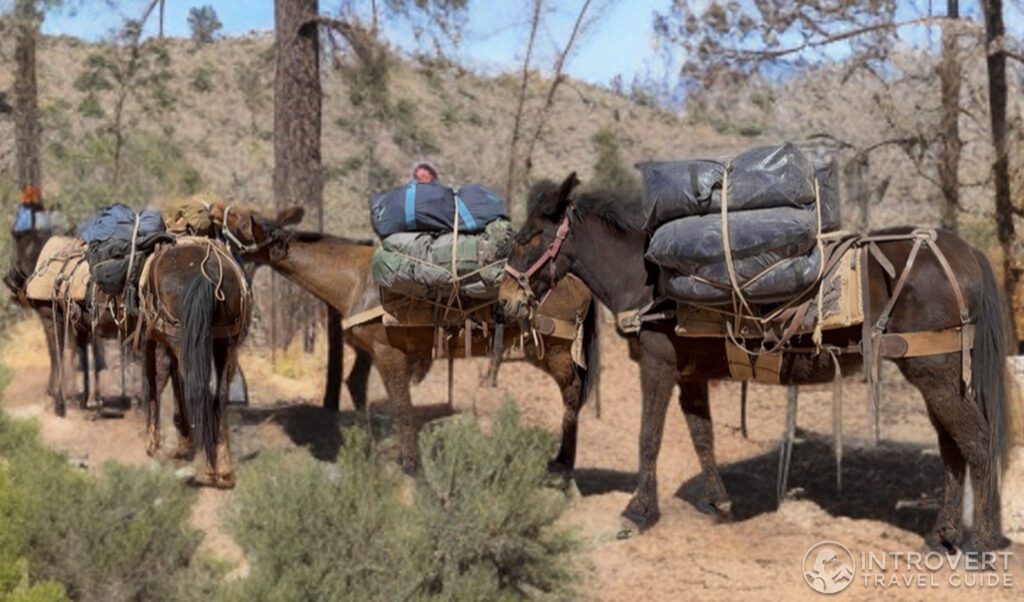
The controversy involves decades of allegations regarding the neglect, and overworking of horses or mules used to transport tourist gear and supplies in and out of Havasu Canyon. Advocates and tourists have documented cases of malnourished, injured, and severely overworked animals. It does appear that conditions have improved over the years, and the tribe has introduced cargo weight restrictions — which suggests they are taking the concerns of animal advocates into consideration.
I personally believe tourists should only pack what they can carry themselves without relying on the animals. As I mentioned, food and supplies are available at the village, which also directly supports the tribe. Those horses carrying heavy loads all day in the intense heat, and you can search on facebook and google to find photos and reports from past incidents.
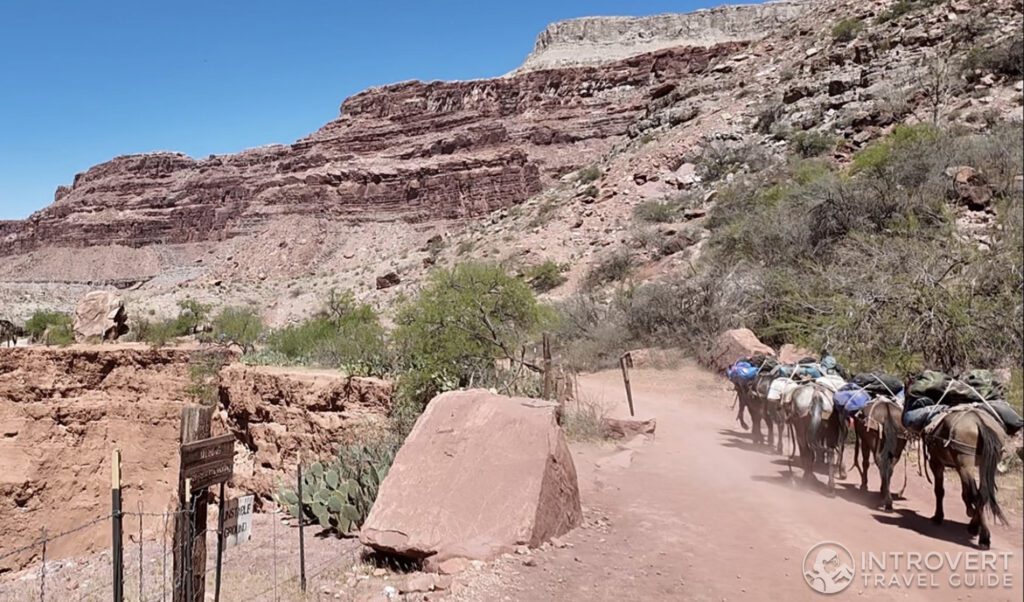
I encourage you to look into this and decide for yourself what feels right. Completely eliminating pack animal services wouldn’t be realistic — the Havasupai rely on them to bring in their own supplies, and the service brings significant revenue to the tribe. I strongly believe it is the tribe’s decision to make. But perhaps raising the price of pack animal transportation would encourage more visitors to carry their own gear without the tribe losing income. Even at a higher price, Havasupai is such a sought-after destination that I don’t think it would dissuade many visitors. It may also be worth exploring alternative forms of transportation — bikes, ATVs, or expanded helicopter cargo services.
Again, it is ultimately the tribe’s decision to make — they know what is best for their land and their people. It is never my intention to pretend otherwise. They have been stewards of this land for over 1,000 years and know it better than anyone. I simply encourage you to be a thoughtful visitor and make choices that reflect respect for the land, the animals, and the people who call it home.