
From K-dramas and BTS to KPop Demon Hunters, Korean pop culture has become a global sensation, and South Korea is now one of East Asia’s leading powers. It’s easy to forget that not long ago, Korea was a war-torn country. It endured Japanese colonization from 1910 to 1945, followed by the devastating Korean War between the North and the South. That war ended in an armistice rather than a peace treaty, so technically the two Koreas are still at war, divided near the 38th parallel.
Despite its tumultuous history, Korea has risen to become the shiny, technologically advanced country it is today. With that history in mind, let me introduce you to 7 must-visit places in Seoul, the capital of South Korea.
1. Gyeongbokgung Palace
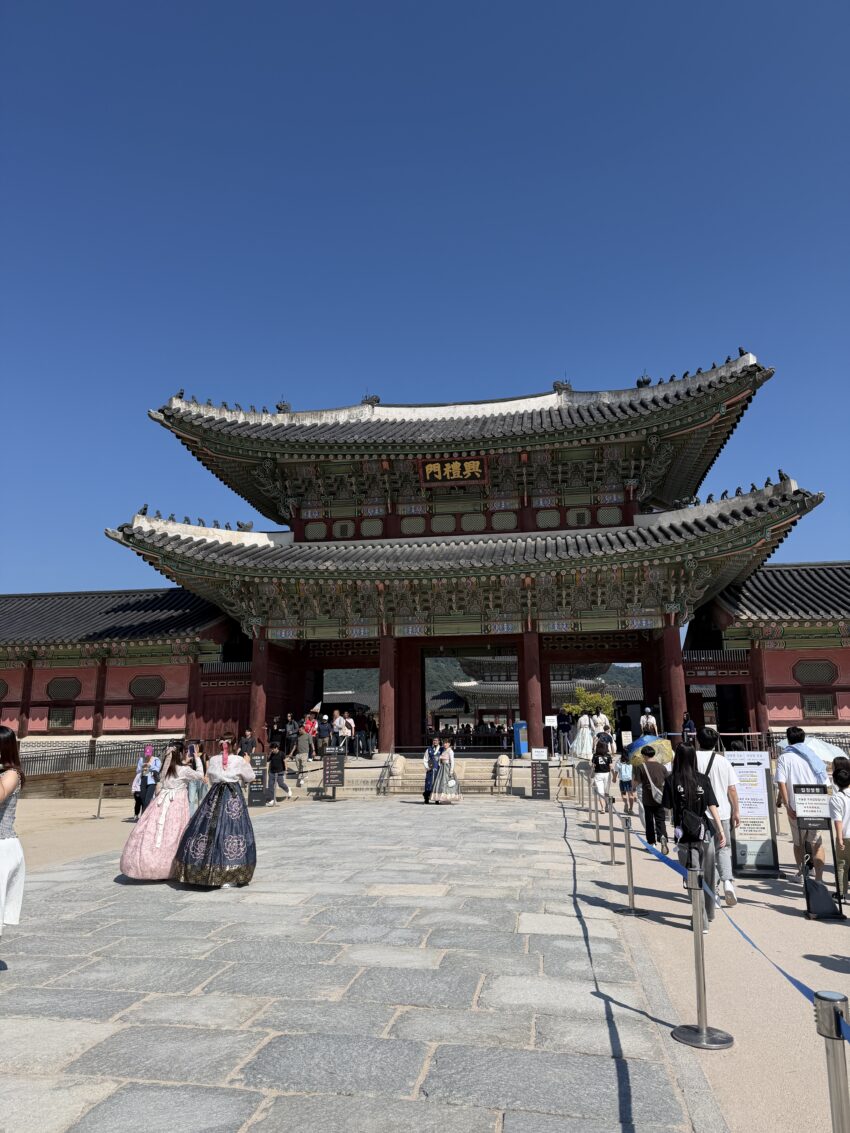
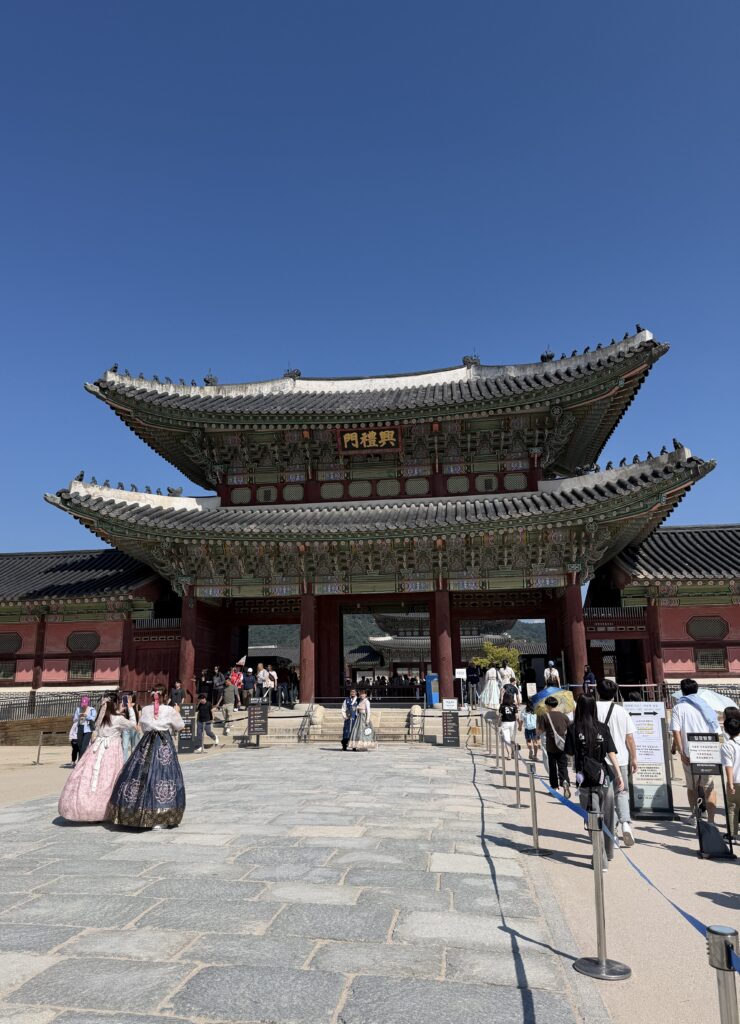
Gyeongbokgung Palace is arguably the most beautiful of Seoul’s five grand palaces, and it’s the largest. Many Joseon kings were crowned here. The palace was destroyed by fire during the Imjin War in 1592 and rebuilt in 1867. Today it stands as a symbol of Korea’s resilience. Admission is 3,000 won for adults, but you can enter for free if you wear a hanbok, the traditional Korean outfit. You can easily rent one from the many shops near the palace.Note that Gyeongbokgung is closed on Tuesdays, so plan your visit for another day. If a Tuesday falls on a public holiday, the palace stays open and closes the next non-holiday day instead.The palace’s hours shift with the seasons, and last entry is one hour before closing. Something like “Hours vary by season, and the last entry is one hour before closing” would cover it without locking in times that might change.
Check the official website for the latest hours here.
2. Gwanghwamun Square
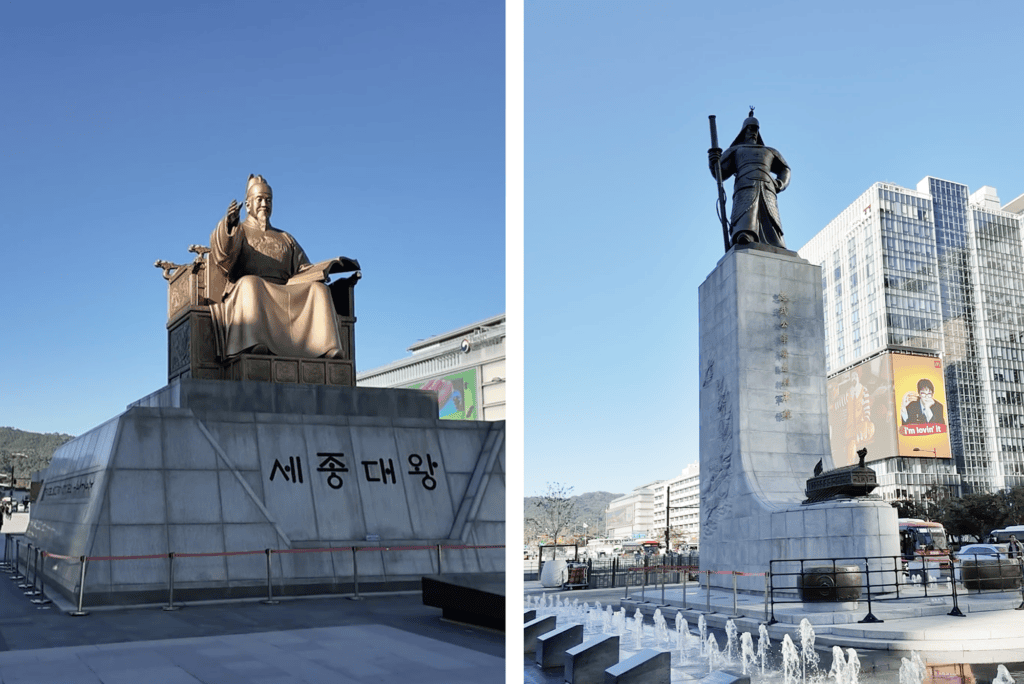
Gwanghwamun Square is a public square that’s easily accessible by subway. It’s bookended by a statue of Admiral Yi Sun-sin on one side and a statue of King Sejong on the other. Admiral Yi Sun-sin (1545–1598) was a naval commander who served during the Japanese invasions of Korea (also known as the Imjin War, 1592–1598). The undefeated admiral won 23 battles against the Japanese navy using innovative tactics. He is considered one of the greatest military commanders in Korean history.
King Sejong the Great (1397–1450) was the fourth king of the Joseon dynasty. He is regarded as the greatest king in Korean history. He is credited with advances in science and technology, the expansion of Joseon’s territory, and the creation of the Korean alphabet, Hangul. The square is an excellent place for a stroll, with beautiful views of Gyeongbokgung Palace and Bugaksan Mountain.
3. Gwangjang Market
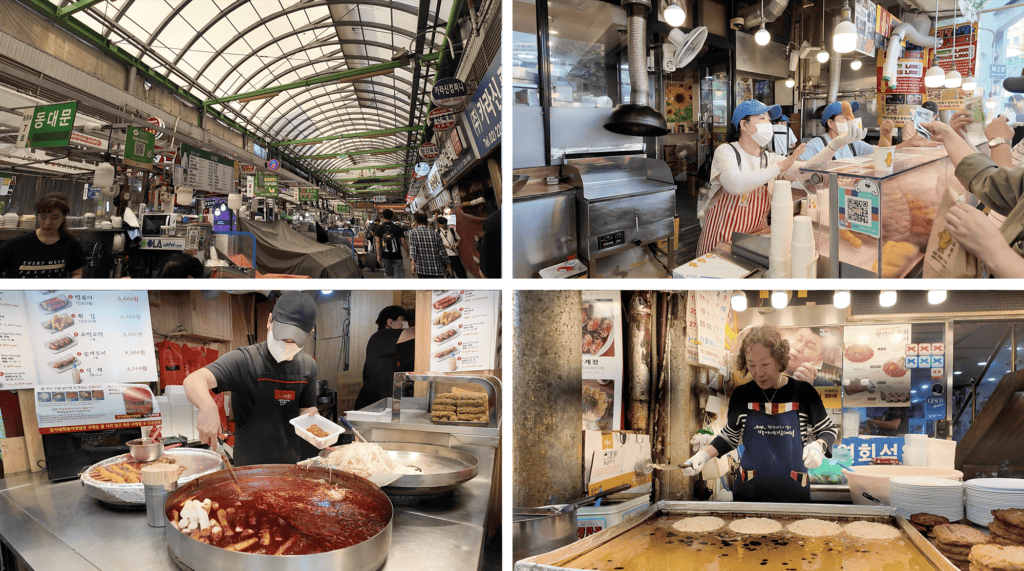
Gwangjang Market is a traditional market in Jongno District. It’s one of the oldest and largest traditional markets in South Korea, with more than 5,000 shops, and it’s famous for its food stalls. There are so many great options. I recommend savory mung bean pancakes (bindaetteok), sweet and spicy rice cakes (tteokbokki), and kimbap. Kimbap is rice and vegetables rolled in sheets of dried seaweed (gim) and sliced into bite-sized pieces, and it comes with a variety of fillings to choose from. My ultimate favorite was a sweet rice doughnut (chapssal donut). I’d go back just for that.
4. Ikseon Dong
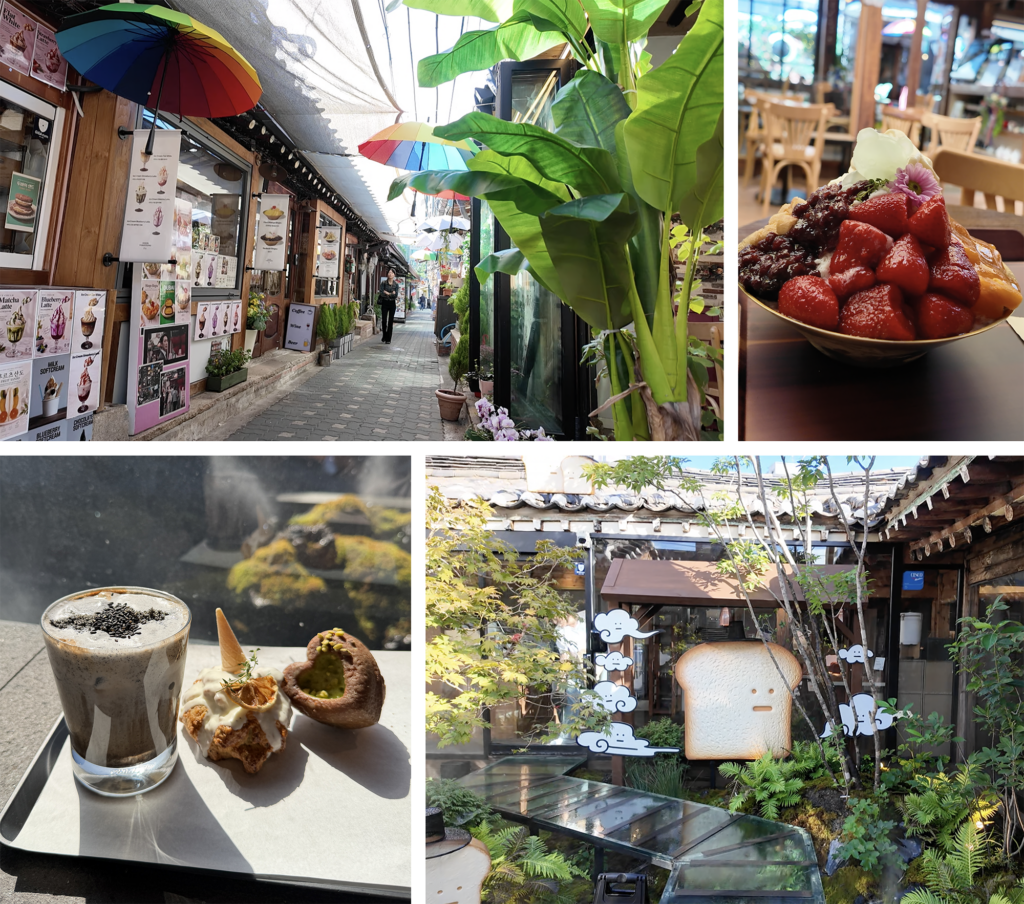
Ikseon-dong is one of Seoul’s oldest hanok neighborhoods. It features a maze of narrow alleys lined with traditional Korean wooden houses that have been converted into trendy cafés, restaurants, and craft shops. Here you can try the viral salt bread (sogeum-ppang). It’s shaped like a croissant but has the soft texture of a dinner roll, and it’s absolutely delicious. Don’t forget to try shaved ice (bingsu), which comes topped with a scoop of vanilla ice cream, fruit, and tiny mochi. It comes in many variations and flavors.
5. Bukchon
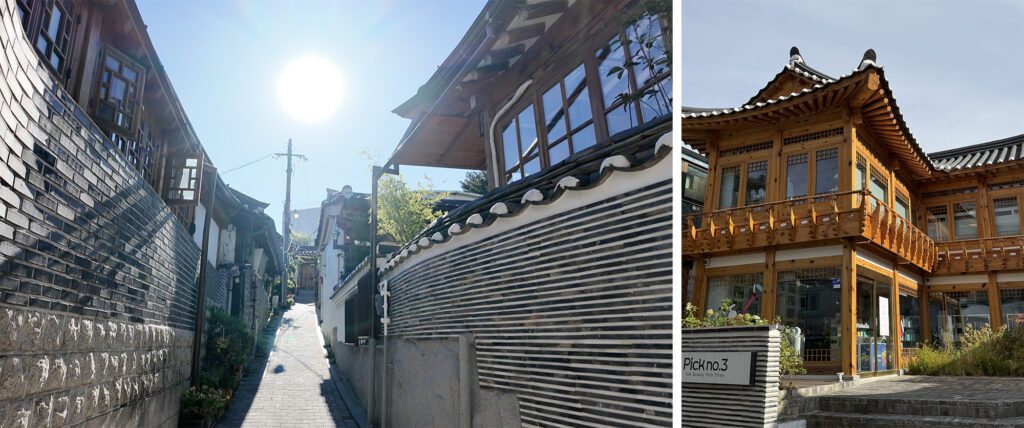
Bukchon is located behind Gyeongbokgung Palace and near other historical sites. The district’s history stretches back 600 years to the Joseon dynasty, although most of the homes were rebuilt in the 1920s and 1930s. Many have been converted into shops, restaurants, and guesthouses, but residents still live in the village, so be quiet and respectful. It gets crowded, so go early. It’s also a good idea to join a walking tour, since it’s a fairly large area with some steep hills. Honestly, I didn’t know where to go, and where I ended up wasn’t very scenic. I saw many unattractive modern homes, which shattered my expectations of a well-preserved traditional village.
6. Seongsu-dong
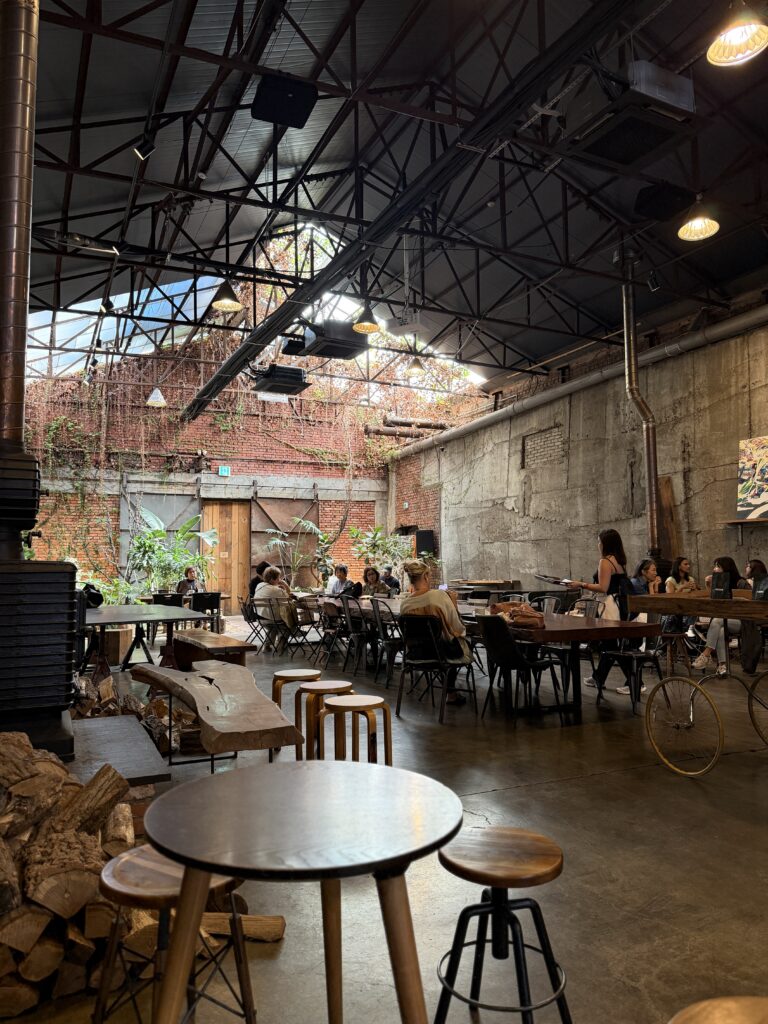
Seongsu-dong has been dubbed the “Brooklyn of Seoul.” This gentrified neighborhood’s streets are filled with young people and plenty of shops and cafés. One popular coffee shop is Daelim Changgo Gallery, a warehouse converted into a gallery and café. It’s very popular with tourists, and you have to pay an entrance fee, which can be used toward drinks and food. While it’s cute, there are plenty of other great coffee shops along the street worth discovering.
7. Myeongdong Night Market
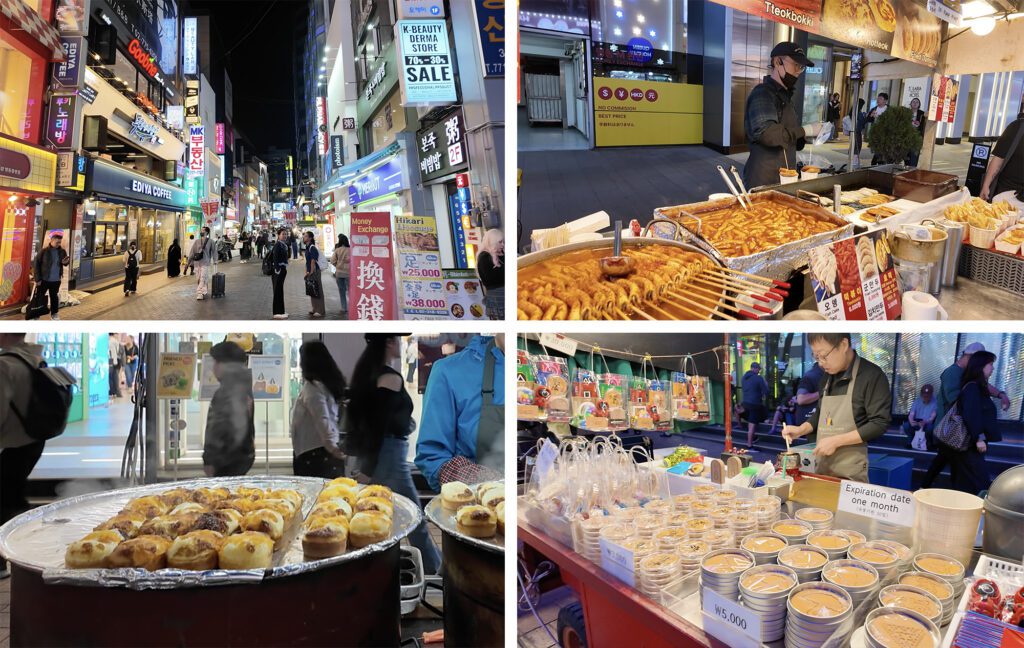
Myeongdong is another fun area to shop and dine. It’s famous for its night market, which starts around 6 p.m. There are so many fun food stalls with a wide variety of food. Don’t fill up at one stall, because you’ll want to try as many as possible. Keep in mind that it’s popular with tourists, so prices are pretty high.
Honorable Mentions
Of course, Seoul has far too many great places to fit into a top-seven list. If you have extra time, here are a few more worth adding to your itinerary.
Starfield Library at COEX
This free library inside COEX Mall in Gangnam is famous for its towering bookshelves, which hold around 50,000 books. It’s one of Seoul’s most photographed spots. Take Line 2 to Samseong Station.
Cheonggyecheon Stream
Once buried under a highway, this stream was restored in 2005 and is now a peaceful walking path through downtown Seoul. It starts near Gwanghwamun Square and is especially lovely at night, when it’s lit up.
Seoul Forest
This large park has walking trails, gardens, and even deer. It’s right next to Seongsu-dong, so grab a coffee and come here for a stroll or picnic. Take the Suin-Bundang Line to Seoul Forest Station.
Dongdaemun Design Plaza (DDP)
Designed by architect Zaha Hadid, this curvy, futuristic building looks like a spaceship, especially when it’s lit up at night. Inside, you’ll find exhibitions and design shops. Take Line 2, 4, or 5 to Dongdaemun History & Culture Park Station.
Useful tips
As an international traveler, you will most likely arrive at Incheon International Airport. It’s a modern airport, but finding your way out of it can be tricky.
Remember a couple of things when you land. First, get an eSIM to avoid roaming charges. There are many options. I chose SK Telecom’s eSIM with the voice add-on, but I found it confusing to use, so I don’t recommend it.
Second, go to any convenience store in the airport and get a T-money card. It’s a transportation card that covers bus, subway, and taxi fares. I tried the vending machine, but it wasn’t user-friendly either. Your best bet is to ask a store clerk. The card itself cost about 3,000 won, and you have to load it with cash. Each subway ride costs about 1,500 won. You can add more money at any subway station or convenience store.
The easiest way out of Incheon Airport might be the train. There’s a direct express line to Seoul, as well as trains that make multiple stops along the way.
Another option is the airport limousine bus. Follow the signs to a kiosk, enter your destination, and it will show you a bus that goes there. Buses run frequently, about every 15 minutes. My ride cost about 15,000 won and took about two hours to reach the Gangnam District. Travel time varies depending on traffic.